

Every workplace has at least one person who gets under your skin. Sometimes it is a personality clash. Sometimes it is a communication mismatch. Sometimes it is something deeper that you cannot quite name. What most people never realize is that irritation at work is rarely random. It follows patterns, and those patterns reveal something important about your boundaries, values, and emotional habits.
One of the most useful ideas for understanding workplace tension is the concept of triggers. A trigger is not proof that someone is a bad coworker. It is, as the text puts it, “a fast emotional signal” that connects to a boundary, value, or past experience. When you treat triggers as information instead of personal attacks, you immediately gain more control over your reactions. Naming the trigger reduces its intensity and gives you space to choose a response instead of reacting on autopilot.
Boundaries play a major role in why certain people bother you. A boundary is an internal guideline that protects your time, energy, and sense of fairness. When someone crosses one, irritation follows. If a coworker interrupts your focus, the boundary being hit is your need for uninterrupted time. If someone takes credit for your work, the boundary is fairness. If a colleague constantly unloads emotional stress onto you, the boundary is workload balance. Once you identify the boundary, the next step becomes clearer. You can set a time boundary with a simple script like “I am heads down until 3pm; can this wait,” or reinforce a respect boundary with a calm correction.
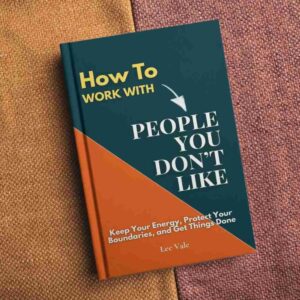
Emotional patterns also shape how you respond to difficult coworkers. Everyone has default reactions when annoyed. Some people snap. Others withdraw. Some try to smooth things over to avoid conflict. These patterns formed long before your current job, and they often repeat automatically. The text explains that emotional habits “formed because they served a purpose at some point,” but they do not always help you succeed today. When you notice your pattern, you can decide whether it helps or hurts your effectiveness. A small pause before responding, a clarifying question, or a short boundary phrase can interrupt an old habit and create a better outcome.
Another powerful strategy is to map your reactions. Choose a recent interaction that bothered you and write down three things: the trigger, the boundary it hit, and one small alternative action you could take next time. This simple exercise turns irritation into strategy. It also reveals recurring themes. If the same boundary is violated repeatedly, you know where to focus your energy. If the same person drains you consistently, you know who requires clearer limits.
Personality differences are another major source of friction. Some people draw energy from conversation, while others need quiet to focus. A talkative coworker is not necessarily disrespectful. They simply operate differently. A blunt communicator may value speed, while a sensitive colleague values tone. When you understand the underlying differences, you stop interpreting behavior as personal attacks. You can adjust your approach, set expectations, and create working agreements that reduce friction.
Not every coworker drains you equally. One of the most practical tools is an energy audit. For one week, track how you feel after interactions. Notice which meetings leave you exhausted or distracted. Patterns will emerge. This helps you prioritize where to set boundaries, where to adjust communication, and where to create distance. Some people require structural boundaries. Others require emotional distance. A few may require both.
It is also important to distinguish between discomfort and danger. Disliking someone is not the same as being unsafe around them. Dislike is emotional. Unsafe behavior involves risk, such as harassment, dishonesty, or retaliation. The text makes this distinction clear by noting that unsafe behavior “crosses a line from uncomfortable to harmful.” Most dislikes can be managed with boundaries, scripts, and practical distance. Unsafe behavior requires documentation and escalation.

Understanding why certain coworkers bother you is not about blaming yourself or excusing others. It is about gaining clarity. When you know your triggers, boundaries, and patterns, you stop reacting automatically. You start choosing responses that protect your energy and support your goals. This shift makes you more effective, more confident, and far less affected by the personalities around you.
The real power comes from recognizing that irritation is not a sign of weakness. It is a signal. When you learn to interpret that signal, you transform difficult interactions into opportunities for clarity, growth, and stronger professional presence.
Related Articles:
How to Stay Professional When Someone at Work Is Driving You Up the Wall
When Office Gossip Turns Toxic: The Emotional Toll of the Workplace Whisperer
How to Protect Your Peace When Saying No Feels Impossible at Work