

Meetings have quietly become one of the biggest sources of wasted time in the modern workplace. They fill calendars, interrupt deep work, and create the illusion of productivity while draining the hours you need for real progress. The attached document does not sugarcoat this reality. It states clearly, “Meetings eat time. It sounds blunt, but most professionals know it to be true.” Anyone who has ever watched a single thirty minute meeting derail an entire afternoon knows exactly how accurate that statement is.
The real problem is not the meeting itself. It is the fragmentation it creates. The document highlights a powerful truth that many people underestimate: “A ten minute interruption can erase an hour of productive time.” Deep work requires immersion. You cannot produce your best ideas in short slices of time between check ins. You cannot solve complex problems when your brain is constantly shifting gears. Meetings do not simply take time. They destroy momentum, and momentum is the foundation of high quality work.
Creativity is one of the biggest casualties of meeting overload. When your day is filled with predictable status updates and routine check ins, there is no space for exploration or innovation. You become a reporter instead of a thinker. You spend more time preparing updates than producing outcomes. Over time, this leads to slower progress, more errors, and a sense of stagnation that feels like burnout. Many professionals blame themselves for this feeling, but the real cause is structural. It is the constant interruption cycle that prevents your brain from reaching the depth required for meaningful work.
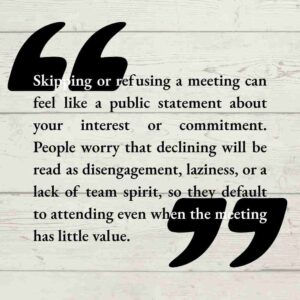
So why do we tolerate this? Fear. The document captures this dynamic with precision: “Skipping or refusing a meeting can feel like a public statement about your interest or commitment.” No one wants to look lazy or uncooperative. Declining a meeting feels like a political move rather than a productivity decision. As a result, people attend meetings even when the meeting has no agenda, no purpose, and no clear outcome. They show up because it feels safer than being misunderstood.
On the leadership side, many managers cling to meetings because they equate visibility with trust. They built their careers in a world where face time was proof of effort. If they could see you working, they felt confident that progress was happening. Written updates feel risky to them. Meetings feel safe. They are not trying to waste your time. They are trying to protect themselves from surprises, miscommunication, and pressure from above. Meetings give them a sense of control, even when the meeting itself adds no real value.
The solution is not rebellion. It is strategy. You can reduce meetings without triggering defensiveness by offering alternatives that meet the same underlying needs. A concise weekly summary can replace a long status call. A shared dashboard can eliminate the need for multiple follow ups. A two sentence daily update can give your boss the visibility they want without interrupting your workflow. A clear decision log can prevent unnecessary discussions. These tools give your boss reassurance, clarity, and control without requiring you to sit through another forty five minute ritual.
Start with small experiments. Replace one recurring meeting with an asynchronous update. Suggest a shorter and more focused agenda. Offer a pre read that eliminates the need for a live discussion. These small shifts build trust and demonstrate that fewer meetings lead to faster decisions and better outcomes. When your boss sees that productivity improves, they become more open to reducing meeting frequency.
The document ends with a powerful principle that applies to every workplace: change begins with awareness, not blame. Your boss is not the enemy. They are operating from habit, fear, and outdated norms. When you understand those drivers and offer better alternatives, you shift the culture without conflict. You also reclaim the deep work time that meetings have been quietly stealing for years.
The modern workplace rewards people who can protect their focus, manage their time, and communicate clearly. Reducing unnecessary meetings is one of the most effective productivity strategies available today. When you understand the psychology behind meeting overload and you offer alternatives that still give your boss visibility and confidence, you create a healthier and more efficient work environment. You also create a workday that supports creativity, clarity, and long term performance.
Meeting overload does not have to be the norm. With the right systems and habits, you can stay productive even when your boss loves meetings. You can protect your time, improve your output, and build a more sustainable relationship with your work. And you can do it without confrontation, without tension, and without sacrificing your reputation. That is the real power of understanding how meetings work and how to reshape them.
Related Articles:
How to Handle Difficult Personality Types at Work Without Losing Your Calm
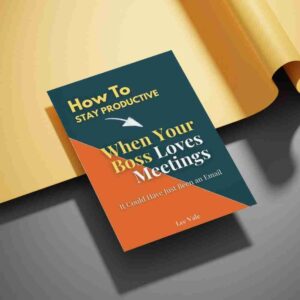
Why Your Boss Loves Meetings and How to Stay Productive Anyway
The Hidden Cost of Pointless Meetings at Work