

If you have ever stared at your calendar and wondered how a single thirty minute meeting managed to ruin your entire day, you are not imagining it. Meeting overload is one of the biggest productivity killers in the modern workplace. The attached document says it plainly: “Meetings eat time. It sounds blunt, but most professionals know it to be true.” Anyone who has tried to get real work done between back to back check ins knows exactly how accurate that statement is.
The problem is not only the meeting itself. It is the time around it. You cannot dive into deep work ten minutes before a sync, and you cannot instantly return to focus afterward. The document explains that “a ten minute interruption can erase an hour of productive time,” and if you have ever tried to jump back into a complex task after a quick check in, you know how true that feels. Your brain needs time to settle into concentration, and every interruption forces a restart. This constant context switching turns your day into a series of half finished thoughts and half completed tasks.
Creativity suffers just as much as productivity. When your schedule is filled with predictable status updates, there is no mental space for ideas to develop. You may complete tasks, but breakthroughs become rare. You start choosing small, easy items because they are the only ones that fit between meetings. Before long, your entire job becomes a cycle of updates, follow ups, and circling back. This is one of the most common paths to burnout, and many people do not realize the cause is structural rather than personal.
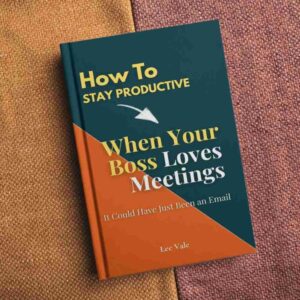
So why do we keep attending meetings that do not need to exist? Fear. The document captures this dynamic perfectly: “Skipping or refusing a meeting can feel like a public statement about your interest or commitment.” No one wants to look disengaged or uncooperative. Declining a meeting feels like a political move, not a productivity decision. So people show up even when the meeting could have been a three line email or a short written update.
On the other side of the equation, many old school managers genuinely believe meetings are the best way to stay informed. They built their careers in a work culture where visibility equaled trust. If they could see you working, they felt confident things were moving. Written updates feel risky to them. Meetings feel safe. They are not trying to waste your time. They are trying to reduce their own anxiety about being blindsided or missing important details.
Once you understand this, everything changes. Instead of fighting meetings head on, you can offer alternatives that give your boss the reassurance they are looking for. A short daily update can replace a long check in. A weekly summary can replace a recurring status call. A shared tracker can eliminate the need for multiple follow ups. A clear decision log can prevent unnecessary discussions. These tools make your work visible without requiring you to sit in a room explaining it.
Start small. Replace one recurring meeting with an asynchronous update. Suggest a ten minute decision call instead of a forty five minute discussion. Send a summary before someone asks for a sync. These tiny shifts build trust and show your boss that they can stay informed without interrupting your flow. Over time, these habits create a culture where clarity and communication do not depend on constant meetings.
The document ends with a powerful reminder: change starts with awareness, not blame. Your boss is not trying to sabotage your productivity. They are following habits that once worked for them. When you offer better, faster, and more efficient ways to communicate, you help them evolve. You also reclaim the deep work time that meetings have been quietly stealing for years.
The modern workplace rewards people who can manage their time, protect their focus, and communicate clearly. Reducing unnecessary meetings is one of the most effective time management strategies available today. When you understand the psychology behind meeting overload and you offer alternatives that still give your boss visibility and confidence, you shift the culture without conflict. You also create a workday that supports creativity, efficiency, and long term performance.
Meeting overload does not have to be the norm. With the right systems, scripts, and habits, you can stay productive even when your boss loves meetings. You can protect your time, improve your output, and build a healthier relationship with your work. And you can do it without confrontation, without tension, and without sacrificing your reputation. That is the real power of understanding how meetings work and how to reshape them.
Related Articles:
The Hidden Cost of Pointless Meetings at Work
Why Your Boss Keeps Calling Meetings — and How to Handle It Better
How to Work With a Boss Who Thinks Meetings Mean Productivity