

Every workplace has that one person who tests your patience. Maybe they interrupt constantly. Maybe they make passive aggressive comments. Maybe they complain, gossip, or nitpick every detail. You do your best to stay calm, but inside you feel the tension building. The real challenge is not the difficult person. It is staying professional when your emotions are pulling you in the opposite direction.
The truth is simple. You cannot control how other people behave, but you can control how you respond. And that response is what protects your reputation, your energy, and your long term success.
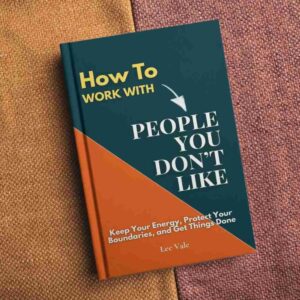
The first step is recognizing your emotional patterns. Everyone has a default reaction when annoyed. Some people snap. Some shut down. Some try to smooth everything over. These patterns feel automatic because they were learned long before your current job. As the text explains, emotional habits “formed because they served a purpose at some point,” but they do not always help you today. When you notice your pattern, you gain the power to interrupt it.
A powerful technique is the pause. It sounds simple, but it is one of the strongest tools you have. When someone irritates you, your body reacts before your brain does. A pause gives your thinking mind time to catch up. It creates a gap between the trigger and your response. In that gap, you can choose professionalism instead of impulse. A single breath, a slow exhale, or a brief silence can prevent an entire conflict.
Once you pause, the next step is clarity. Ask yourself what boundary was crossed. Was it your time, your focus, your sense of fairness, or your need for respect. When you identify the boundary, your response becomes more strategic. Instead of reacting emotionally, you respond with purpose. A calm statement like “I need to finish this task before we continue” or “Let’s stick to the agenda” protects your professionalism without escalating the situation.
Another bold strategy is to use neutral language. When someone is being difficult, your instinct may be to match their tone. That only fuels the fire. Neutral language does the opposite. It removes emotion from the exchange and keeps the focus on the work. Phrases like “Here is what needs to happen next,” “Let’s clarify the next step,” or “What is the specific concern” shift the conversation away from drama and toward action.
Direct questions are especially powerful with passive aggressive behavior. When someone hints, sighs, or makes sideways comments, bring the issue into the open without hostility. Ask, “What outcome are you hoping for,” or “What is the concern you want to address.” These questions force clarity and make it harder for the other person to hide behind tone or implication.
Protecting your energy is just as important as managing the interaction. Difficult coworkers can drain you long after the conversation ends. That is why you need micro resets. After a tense moment, stand up, stretch, take a breath, or write down your next task. These small actions act like emotional circuit breakers. They prevent someone else’s mood from hijacking the rest of your day. The text recommends simple physical cues because sensory shifts help “dissipate negativity faster than mental effort alone.”
Another bold move is to control the structure of your interactions. If someone constantly derails meetings, use agendas, time limits, or speaking rounds. If someone interrupts you, establish a predictable script like “I want to finish my point” or “Let me complete this thought.” If someone overwhelms you with messages, set communication windows. Structure is not rigid. It is protective. It keeps the work moving and reduces opportunities for conflict.
Documentation is another tool that keeps you professional and protected. When someone repeatedly creates problems, write down dates, actions, and impacts. This is not about building a case against them. It is about keeping the facts clear so you can make decisions based on evidence, not emotion. Documentation also helps you stay calm because you no longer feel like you are carrying the situation in your head.
The boldest strategy of all is choosing where to invest your energy. Not every battle is worth fighting. Not every comment deserves a response. Not every coworker needs to be fixed. Your professionalism is not measured by how much nonsense you tolerate. It is measured by how well you protect your focus, your boundaries, and your emotional stability.
Staying professional when someone annoys you is not about being passive. It is about being powerful. It is about choosing clarity over chaos, strategy over impulse, and composure over reaction. When you master that, you become the person who can handle pressure, navigate conflict, and lead with confidence.
You cannot control difficult people, but you can control the atmosphere around you. And that is where your real influence begins.
Related Articles:
Why Some Co-Workers Bother You More Than Others
How to Handle Difficult Personality Types at Work Without Losing Your Calm
How to Set Boundaries With Co-Workers Without Creating Drama